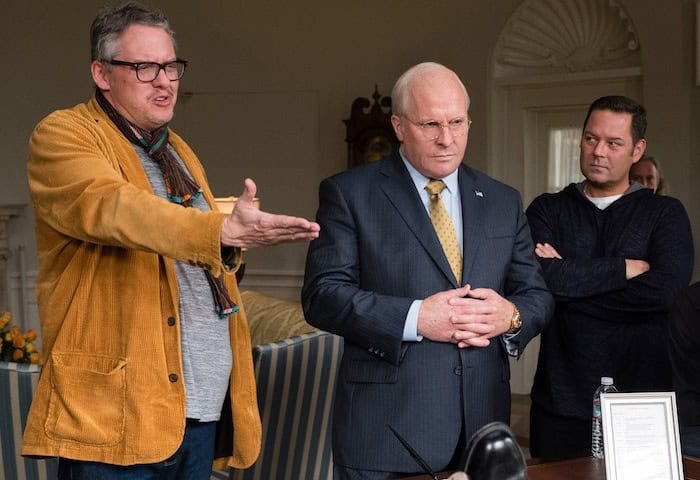
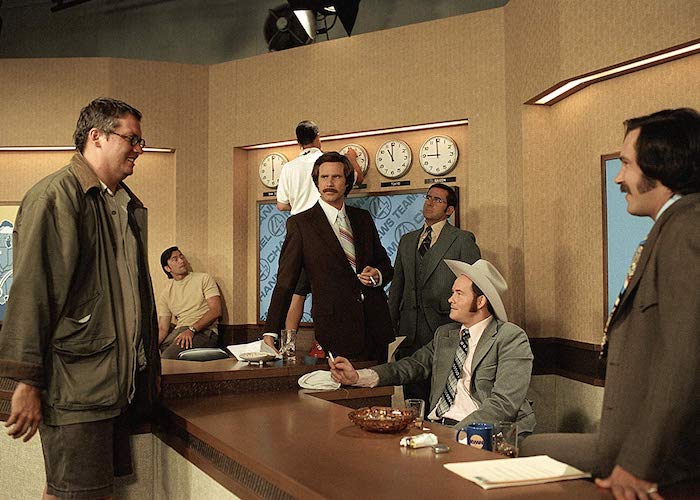
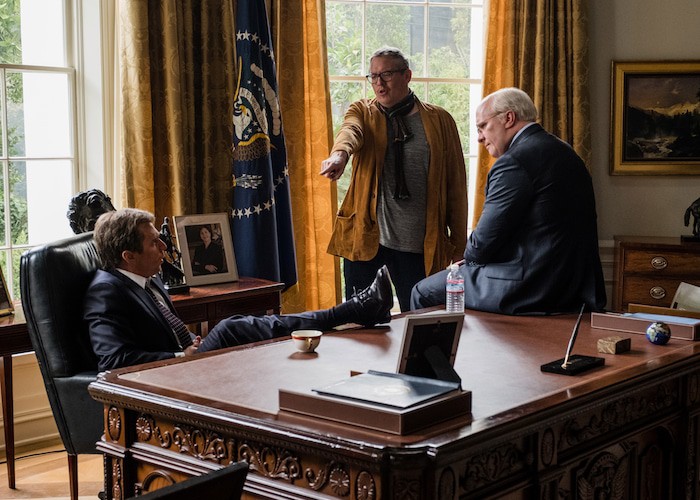
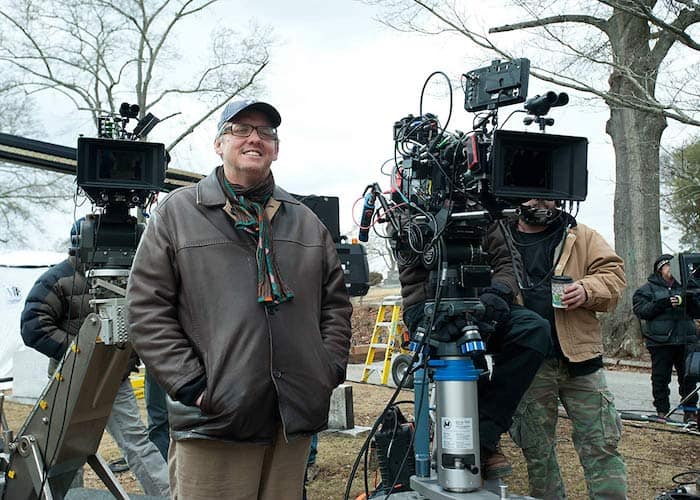
If people really pay attention to directors, a lot of them found out who Shane Black is this weekend. Iron Man 3, his second best film as a director, sees him transitioning to a phase that he’s lived in before as a screenwriter. He found success in his twenties after acting in Predator and selling his script for Lethal Weapon, following-up with even more stories about kidnapping and Christmas. He’s brash, great with a comeback, and known for inserting fourth wall-breaking jabs into his scene descriptions, but he’s also been on both sides of the studio coin. That’s given him a front row seat for great success, backlash, a re-emergence that didn’t strike it big, and now another resurrection. It was clear before that he had talent, and now he’s got wisdom. So here’s a bit of free film school (for fans and filmmakers alike) from a man who knows what you find when you look up “idiot” in the dictionary.
6 Filmmaking Tips from Charlie Chaplin
Features By Scott Beggs on April 17, 2013 | Be the First To CommentThe 124th anniversary of Charlie Chaplin‘s birthday was yesterday, and the date represents both the birth of a man and the birth of a cultural icon. Perhaps the biggest of them all. Chaplin made a name for himself during the early years of cinema where silent films had a natural global appeal and became a worldwide name as an actor, producer, writer and director. He took comedy seriously, building upon silly slapstick with The Tramp and taking on Hitler with The Great Dictator. It’s more than likely that the world will never see anyone rise to his kind of prominence. So here’s a bit of free film school (for fans and filmmakers alike) from Sir Charles Spencer Chaplin.
Bridging two worlds, Sam Raimi has done something incredibly difficult as a filmmaker. He’s proven himself as the capable creator of massive budget spectacle with heart while remaining the cult hero that early fans continue to worship. He sold out without selling out. That in itself is a bold lesson in staying true to your own sensibilities no matter what the bottom line is, but there’s a lot more to learn from the man who grew to prominence by cutting off Bruce Campbell’s hand. The key? You can’t just take a hand; you have to replace it with a chainsaw. So here’s a bit of free film school (for fans and filmmakers alike) from a very snappy dresser who doesn’t mind getting covered in blood.
6 Filmmaking Tips From Dennis Hopper
Features By Scott Beggs on March 27, 2013 | Be the First To CommentDennis Hopper is fucking awesome. I use the present tense there because the man, though gone, is eternal. At least when it comes to his art. He definitely had some experiences. Several that no one could be proud of, but he also came to represent a free wheeling sensibility that came with defying the establishment while learning from it. The man’s resume remains formidable (and it will only continue to grow with more “Very Special Thanks” entries). So instead of listing his best movies, take your pick. You can probably name 10 you love just off the top of your head. There are a ton of them. So here’s a bit of free film school (for fans and filmmakers alike) from a real easy rider.
6 Filmmaking Tips From Harmony Korine
Features By Scott Beggs on March 13, 2013 | Be the First To CommentThat fuzzy guy on the end there came up in filmmaking with Kids when he was just a kid. With that, and with his following projects, Harmony Korine has awed a rotating audience while confounding all the people that his audience convinces to please, please, please just watch for fifteen minutes. He’s the fresh voice most people claim they want in filmmaking, but he doesn’t fit in with any grand tradition. It’s not like others have made Korine-style movies while orbiting around a shared stylistic vision. At least, if they have, they haven’t reached his stature. Since there won’t be a Weird Wave that grows out of what he’s doing, he remains a vibrant loner and a wonderful army of one. So here’s a bit of free film school (for fans and filmmakers alike) from Mister Lonely.
SXSW 2013: 7 Filmmaking Tips from Danny Boyle
Features By Jack Giroux on March 11, 2013 | Be the First To CommentSo far one of the highlights of SXSW was the panel featuring director Danny Boyle. The enthusiasm he shared with us about the event was evident during his Q&A. Even when the nifty “Danny Boyle’s Filmography” montage Fox Searchlight cut together was playing we saw Boyle dancing to it. He was happy to be there, and so were we. While the Slumdog Millionaire director was there to promote Trance, Boyle discussed many of his films, and the lessons he learned from them. Unfortunately he didn’t have time to reminisce about all his movies, but what the director of Trance did talk about was noteworthy. That’s why we took notes:
Coming off of his second Oscar win for Best Director, Ang Lee is as fierce a filmmaking force as ever. But even if his name comes with a sheen of prestige, it doesn’t change a broad range of topics and tones that he’s been able to capture on screen. This is the man who made the Civil War-era Ride with the Devil and contemporary dramedy Eat Drink Man Woman. Not to mention Brokeback Mountain right after Hulk. The man’s versatile. So here’s a bit of free film school (for fans and filmmakers alike) from the Crouching Tiger From Taiwan.
6 Filmmaking Tips From Oscar Winning Directors
Features By Scott Beggs on February 20, 2013 | Be the First To CommentYou know how sometimes your favorite series will do a clip show, or how a popular radio broadcast might replay old segments that tie-in thematically in order to take a vacation? Well, I’m using the occasion of the Academy Awards to do pretty much the same thing. It’s sort of obvious that several of the directors featured in this column are also Oscar winners. It’s a veritable Hall of Fame. Doing an Oscar-themed entry is a little bizarre because several weeks feature a gold-owning alum anyway (so this isn’t a complete list of the Best Directors featured on 6 Filmmaking Tips), but it’s still worth packaging their advice as a kind of collective knowledge set held by people who have statues on their mantel. Which means, depressingly, an excerpt from our most popular entry won’t be featured here. Not to mention others like Kubrick, Cronenberg or PTA. Fortunately, there are some truly immense talents who have hoisted Oscar on high even if some towering talents never had that particular honor. So here are some filmmaking tips (for fans and filmmakers alike) from an incredibly elite club of Best Director winners.
6 Filmmaking Tips From John McTiernan
Features By Scott Beggs on February 13, 2013 | Be the First To CommentHe’s made some amazing films, he stands as an icon of a lengthy era, but I submit that John McTiernan is still an unfairly maligned filmmaker. He’s relegated by many to a position as merely a mindless action director, and maybe, yeah, Rollerball was tough to stomach, but there’s a reason why Die Hard is still used as the template in thousands of pitch meetings every year. Plus, the guy went to Juilliard (so he’s probably also an incredible dancer). Those who dismiss him do so at their own peril and have clearly never heard the man speak about the craft of filmmaking. He knows a production truck’s worth of practical information and can condense it into lessons that make sense to all of us rubes. So here’s a bit of free film school (for fans and filmmakers alike) from a man who started his studio career by having an alien attack Arnold Schwarzenegger.
6 Filmmaking Tips From Silent Era Icon Harold Lloyd
Features By Scott Beggs on January 30, 2013 | Be the First To CommentAn icon of the silent film era, Harold Lloyd first appeared on the silver screen in the short film The Old Monk’s Tale. Its release in February 1913 means this is the 100th anniversary of the start of Lloyd’s movie career. A decade after that not-at-all-illustrious beginning, he would star in Safety Last!, which is almost definitely his most famous film — an unbelievably funny film where a simple store clerk organizes a contest to climb a tall building and ends up having to do it himself. Like Buster Keaton, Lloyd was a master of stunt work, making it look so effortless that audiences could be simultaneously stunned, awed and relieved. Laughter often followed gasps. He was also a director and producer with a unique perspective on the birth of a popular art form. The question is whether his viewpoint can still teach us a few things about the process of filmmaking. I think there is, so here’s a bit of free film school (for fans and filmmakers alike) from a man we’ve known for a hundred years.
12 Filmmaking Tips From Sundance Directors
Features By Scott Beggs on January 16, 2013 | Be the First To CommentThe Sundance Film Festival is one of the largest independent fests in the country, but it probably has the best reputation for launching filmmaking careers and being the only thing in January that will be remembered around Oscar time 13 months later. It’s debatable just how “indie” it is — especially with studio shingles routinely picking up audience favorites for distribution — but it’s difficult to deny the raw directorial power that’s moved through Park City over the years. Names like Christopher Nolan, Kevin Smith, The Coen Brothers and Steven Soderbergh can count themselves amongst the Sundance ranks, but there are many, many more. In that (independent) spirit, here’s a double-size list of tips (for fans and filmmakers alike) from 12 directors who made a name at Sundance.
6 Filmmaking Tips From Quentin Tarantino
Features By Scott Beggs on December 26, 2012 | Be the First To CommentEmerging from a nitrate fire in 1963, Quentin Tarantino was fed only exploitation films, spaghetti Westerns and actual spaghetti until he was old enough to thirst for blood. He found his way into the film industry as a PA on a Dolph Lundgren workout video, as a store clerk at Video Archives and by getting encouragement to write a screenplay by the very man who would make a name for himself producing Tarantino’s films. Peter Bogdanovich (and probably many others) think of him as the most influential director of his generation, and he’s got the legendary story to back it up — not to mention line-busting movies like Pulp Fiction, Inglourious Basterds and Django Unchained under his belt. He’s also the kind of name that makes introductions like this useless. So here’s a bit of free film school (for fans and filmmakers alike) from a guy who really loves Hi Diddle Diddle and plans to keep 35mm alive as long as he’s rich enough to do it.
6 Filmmaking Tips From Kathryn Bigelow
Features By Scott Beggs on December 19, 2012 | Be the First To CommentHanging with bikers, vampires and surfing bank robbers, Kathryn Bigelow has made a name for herself chasing after adrenaline. After mixed reviews and a bad box office break for her Soviet submarine flick K-19: The Widowmaker, Bigelow developed one of writer Mark Boal‘s articles into a television series for Fox called The Inside, then chose to work with him to turn his experiences embedded in Baghdad-patrolling bomb squad into The Hurt Locker. The film — which she never took to studios, opting instead for independent financing and freedom — was a marvel, earning a massive amount of critical love and earning both the Oscar for Best Picture and Best Director for Bigelow. She’s a fierce talent who has weathered a decades-long career to emerge as an important modern storyteller who takes on difficult, true-life events and spins them into profound works. So here’s a bit of free film school (for fans and filmmakers alike) from a woman who likes to blow things up for a living.
6 Filmmaking Tips From Peter Jackson
Features By Scott Beggs on December 12, 2012 | Be the First To CommentWe can all hoist accolades on the filmmakers found in this series, but there are few who are as transparent about their process and actively engaging when it comes to including fans on set (at least via video) than Peter Jackson. Not just a minimal-effort chore for marketing, Jackson seems to relish with childlike abandon in making the Making Of videos and taking audiences behind the scenes of movies while they’re being made. Maybe that shouldn’t be surprising for a details-oriented storyteller who has built entire worlds for us to visually visit. But he wasn’t always sitting on top of Middle-Earth. Before The Lord of the Rings and The Hobbit, it was more likely you’d catch him with a lawnmower in hand and a bucket of fake blood close by. So here’s a bit of free film school (for fans and filmmakers alike) from someone who fought in the Battle of Helm’s Deep.
6 Filmmaking Tips From Akira Kurosawa
Features By Scott Beggs on November 28, 2012 | Be the First To CommentThe Movie King. The Emperor. Even at their height, words fail to capture the towering legacy of a master like Akira Kurosawa. Growing up with a movie fanatic father, the writer/director was educated with thousands of silent films, and he would go on to make perhaps more masterpieces than any other singular filmmaking force. With Throne of Blood, Yojimbo, Seven Samurai, Ran, Rashomon and many more, he became immortal. So here’s a bit of free film school (for fans and filmmakers alike) from a man who had the heart of a child and the mind of a genius.
6 Filmmaking Tips From George Lucas
Features By Scott Beggs on November 14, 2012 | Be the First To CommentBy at least two metrics, George Lucas is the most successful independent filmmaker of all time. He’s made other films, sure, but it was Star Wars that took everyone – including the director – by surprise. Ultimately, the largeness of that movie swept Lucas up, driving him further into his own universe, and he’s lived there for three decades. Now he’s sold the property to a company that has vowed to continue the story without him, and that comes with a promise to retire from big movies. What that means is anyone except Lucas’ guess, but it’s not hard to imagine that his next projects will be more American Graffiti than Amidala. So here’s a bit of free film school (for fans and filmmakers alike) from the man who invented and tore down your childhood.
6 Filmmaking Tips From Steven Soderbergh
Features By Landon Palmer on November 8, 2012 | Be the First To CommentSteven Soderbergh is one of the most prolific filmmakers of our era. Though his early retirement is immanent, he’s released more films – and a greater variety of films – in his twenty-three years of directing than some filmmakers helm in a lifetime. Since bursting on the American independent film scene in 1989 with sex, lies, and videotape, Soderbergh has made studio blockbusters and micro-budget experiments, strange remakes and films that blur the line between narrative and documentary, not to mention semi-biopics of public figures as diverse as Spalding Gray, Che Guevara, Erin Brockovich, and Channing Tatum. He’s been a leader in exploring the possibilities of new digital filmmaking technologies, and it seems there isn’t a genre or scale of filmmaking that he hasn’t yet touched. He’s even made a film that you’ll never see. Last week, the trailer for Side Effects, Soderbergh’s last theatrical film and his penultimate film project (the final, final one being the made-for-HBO Liberace biopic Beyond the Candelabra), made its debut on the web. So with the supposed final days of an impressive career by a prolific filmmaker upon us, here’s a bit of free film school from a guy that considers both George Clooney and Sasha Grey his muses.
6 Filmmaking Tips From The Wachowskis
Features By Scott Beggs on October 31, 2012 | Be the First To CommentThe Wachowskis haven’t directed a ton of movies. They also haven’t given a ton of interviews. If we can look at their output versus their impact (and in the case of Speed Racer, divisiveness), they look an awful lot like auteurs. There’s a number of themes they enjoy working with as well as a brand of visuals that seem conflicting movie to movie even as they share a kernel of The Future between them. At the very least, it would be easy to call them auteurs, but they completely reject the title and the concept. After Bound, The Matrix series, Speed Racer, Cloud Atlas and their non-directorial writing (most notably V for Vendetta), they’ve maintained a firm view of film as a truly, inextricably collaborative process. For them, that goes even above and behind the standard meaning. They’re a bit enigmatic, but that’s fantastic. So here’s a bit of free film school (for fans and filmmakers alike) from two totally normal, crazy people named Lana and Andy.
6 Filmmaking Tips From Dario Argento
Features By Scott Beggs on October 24, 2012 | Be the First To CommentThe word “Giallo” is Italian for “Yellow” which was the color of the covers of old pulp novels from the Mondadori publishing house. It’s also the color of the urine that’s scared out of you while watching the best horror flicks. There are a lot of names associated with the film movement (which usually focuses on the very stylish, very violent removal of blood from someone’s body), but at the top of the list is Dario Argento (sorry, Fulci fans). The Italian filmmaker has delivered the truly bizarre and beautiful, making movies like Suspiria and The Bird with the Crystal Plumage amongst many, many others. He was also instrumental in bringing Dawn of the Dead to life and influenced a new generation of horror directors (not to mention leagues of fans). So here’s a bit of free film school (for fans and filmmakers alike) from the master of Yellow.
6 Filmmaking Tips From John Carpenter
Features By Scott Beggs on October 17, 2012 | Be the First To CommentA true master of horror, it’s no surprise that John Carpenter‘s work has shown up in our series where horror filmmakers discuss their favorite scary movies (and, spoiler alert, he’ll show up again next week). His figure looms large inside and beyond the genre, gifting classics like Halloween, Escape From New York , The Thing, Assault on Precinct 13 and Big Trouble in Little China to the world. He’s a quiet-spoken man, which is perhaps not too rare in the world of horror. Although it’s fairly strange to think that this unassuming man made people terrified of being inside their own homes (and, you know, taking trips to Antarctica). So here’s a bit of free filmmaking (for fans and filmmakers alike) from a man who makes our nightmares.
Some movie websites serve the consumer. Some serve the industry. At Film School Rejects, we serve at the pleasure of the connoisseur. We provide the best reviews, interviews and features to millions of dedicated movie fans who know what they love and love what they know. Because we, like you, simply love the art of the moving picture. editors@filmschoolrejects.com
Scott Beggs | Email
Rob Hunter | Email
Federated Media
All Rights Reserved © 2013 Reject Media, LLC | Site Credits | Privacy Policy
Design & Development by Face3